What One Messy Spreadsheet Can Teach You About Learning AI
19 November 2026
Picture a planner at a logistics firm. Every Monday she opens the same spreadsheet. It holds about 4,000 rows of deliveries and one stubborn column headed “reason for delay”. People type into it by hand. Some write “traffic”. Some write “jam on the expressway”. One person, for reasons nobody remembers, only ever writes “sigh”.
One morning she realises a machine could read that column, sort every entry and spot the pattern she keeps missing. The thought will not leave her alone. That small itch is where most people’s interest in AI begins, and it is also the best place to start choosing what to study. If you are comparing ai courses in Singapore, or in any other city, look first at the work already in front of you. It quietly tells you which level of course you need.
Why Choosing AI Courses Is a Management Decision
If you manage people, this choice rarely affects only you. The World Economic Forum’s Future of Jobs Report 2025 found that skills gaps are the biggest barrier to business transformation, cited by 63% of employers. A manager who picks the wrong course wastes personal time and money, and a manager who picks the wrong programme for a team wastes both at scale. The same questions apply whether you are choosing for yourself or for the people you lead: what problem are we trying to solve, how big is the gap, and how much time can anyone realistically protect?
Use the Same Test for Your Team
Ask each team member to name one small, real task they wish a machine could do. Their answers give you a practical shopping list, and they show whether your team needs foundations, a qualification or a specialist skill. Our personal development knowledge hub offers practical tools for turning those answers into learning plans.
A Note on the Examples Used
The programme examples here come from one Singapore provider, Kaplan, because that is where its pathway from diploma to degree is easiest to describe. Qualifications, fees, funding and entry rules differ from country to country and change over time. Treat the details as illustrations, and check each provider’s current information.
Start With the Column, Not the Course
Most people begin their search for AI courses with course titles. That feels sensible, but it puts the cart before the horse. A title tells you what a programme is called. Your own work tells you what you are trying to do. Take that column of delay reasons. Teaching a machine to read it is a text classification problem. Before any clever model touches it, someone has to clean the spelling and decide what the categories are. Someone must also check whether “sigh” means bad weather or a broken van. That is data work, and it is most of the job.
Why the AI Label Can Mislead
Here is the trade-off most guides skip. A course with “AI” in the title sounds like the direct route, yet the planner’s problem is mostly about data: collecting it, tidying it and judging whether a result can be trusted. Gartner’s research backs this up. It predicts that through 2026 organisations will abandon 60% of AI projects that are not supported by AI-ready data, and it found that 63% of organisations either lack the right data management practices or are unsure whether they have them.
Look for AI Paired With Data
For someone like the planner, a programme that pairs AI with data science or analytics may serve better than one that races straight to neural networks. Kaplan’s diploma in artificial intelligence and data science is one example of that pairing. The model is the last ten minutes of the film. The data is everything that happens before the lights go down.
Match the Level to the Gap
The next question is not “which course is best?” but “how big is my gap?” Be honest about where you stand today before you compare AI courses. Someone new to the field, or coming from school, will usually need a diploma to build foundations from programming to statistics. Someone with a diploma and some working experience may prefer a top-up degree that turns what they have into a full qualification. Someone who already holds a degree, perhaps in another field, can look at a master’s that lets them specialise without starting again.
Check for Conversion Routes and Exemptions
The ladder is not as rigid as it looks. Some master’s programmes are built as conversion courses for professionals from other backgrounds. Kaplan’s page describes a conversion route into an AI master’s for people from business, psychology or mathematics without advanced computing skills, and says polytechnic diploma holders may receive up to 12 units of exemption. Ask every provider what your existing qualifications and experience would earn you. Skip a genuine step, though, and the lessons feel like a conversation you joined halfway through.
The Costly Mistakes People Make
The most expensive error is jumping a level to catch up. Someone feels behind, so they sign up for the most advanced programme they can find. Then week three arrives with linear algebra and Python, and confidence drains away. The opposite mistake is quieter. A professional with years of analytics behind them repeats material they already know because the beginner course felt safe. Both people lose time, and time is usually what they had least of.
Ask How You Will Learn
Content matters, but so does the shape of your week. If you work full time, a course built for working professionals, with flexible hours, will carry you further than a perfect syllabus you cannot keep up with. When comparing AI courses, ask how long each programme runs, whether your past qualifications earn exemptions and when classes actually happen. These dull details decide whether you finish. Independent advice helps too. In Singapore, SkillsFuture offers free one-to-one Skills and Training Advisory consultations, and other countries run similar services. Our decision making knowledge hub offers a structured way to weigh the options once you have them.
A Simple Test Before You Apply
Before you commit, write down one real task from your job that you wish a machine could do. Keep it small and specific, like that column of delay reasons. Then read the modules of any of the AI courses you are considering and ask a plain question: by the end, could I solve this? If the answer is yes, you have found a course that fits your gap. If you cannot tell, ask the provider to walk you through it. A good one will be glad you asked.
Final Thoughts
The planner never did find out who kept writing “sigh”. But that one odd column showed her what she needed to learn, and in what order. Your own work holds the same kind of clue. Start with the task, not the title. Remember that the data is most of the job, match the level to your real gap and check how the programme fits your week. Apply the same test to the people you manage, and the choice of AI courses becomes far clearer.
Disclosure and Disclaimer
This is a partnered post. See our disclosure policy for details. The content on this site is provided for general information and educational purposes only. It is not intended as professional career, education or financial advice. Course structures, fees, funding schemes, exemptions and entry requirements vary between providers and countries and change over time. UK readers should check a provider’s accreditation and any government-backed funding support before enrolling. US readers should check a provider’s accreditation and their eligibility for any federal or employer-funded tuition support. Readers in Singapore should confirm current funding eligibility directly with SkillsFuture Singapore and the provider. Readers should seek qualified professional advice for their specific situation. The Happy Manager and Apex Leadership Ltd accept no liability for actions taken in reliance on the content of this article.
Further Reading
- Upskill with MySkillsFuture — SkillsFuture Singapore: The official gateway to course subsidies, funding schemes and free one-to-one Skills and Training Advisory consultations. Read the guide
- Career Skills and Training — GOV.UK (UK): How to find courses and training, and get advice on qualifications and funding, through the National Careers Service and the services in Scotland, Wales and Northern Ireland. Read the guidance
- National Careers Service — Skills Assessment (England): Free, impartial careers advice, including an online skills assessment and a course finder. Read about the service
References
- World Economic Forum (2025), Future of Jobs Report 2025: Workforce Strategies (skill gaps cited by 63% of employers as the primary barrier to business transformation). https://www.weforum.org/publications/the-future-of-jobs-report-2025/4-workforce-strategies
- Gartner (2025), Lack of AI-Ready Data Puts AI Projects at Risk (through 2026, organisations will abandon 60% of AI projects unsupported by AI-ready data; 63% lack or are unsure of the right data management practices). https://www.gartner.com/en/newsroom/press-releases/2025-02-26-lack-of-ai-ready-data-puts-ai-projects-at-risk
- Kaplan Singapore (n.d.), AI Courses (pathways from diploma to bachelor’s and master’s; conversion master’s for professionals from other backgrounds; up to 12 units of exemption for polytechnic diploma holders). https://www.kaplan.com.sg/disciplines/ai-courses-singapore
- SkillsFuture Singapore (n.d.), Upskill (free one-to-one Skills and Training Advisory consultations). https://www.myskillsfuture.gov.sg/upskill/
Image by Mohamed Hassan from Pixabay
Leadership Resources
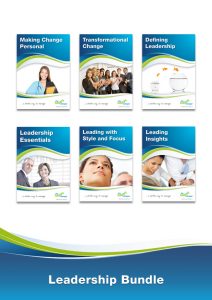 For more leadership resources look at our great-value guides. These include some excellent tools to help your personal development plan. The best-value approach is to buy our Leadership bundle, available from the store.
We’ve bundled together these five e-guides at half the normal price! Read the guides in this order, and use the tools in each, and you’ll be well on your way to achieving your personal development plan. (6 guides, 167 pages, 27 tools and 22 insights, for half price!)
- Leadership Essentials
- Defining Leadership
- Leading Insights
- Leading with Style and Focus
- Transformational Change
- Making Change Personal