Flexible Workplace: How to Build One That Actually Works for Your Team
21 July 2026
Flexible Workplace: How to Build One That Actually Works for Your Team
The New Normal Is Here to Stay
Building a successful flexible workplace has moved from an aspirational project to a core management responsibility. In the UK, 74% of organisations now have hybrid working in place, according to the CIPD’s 2025 Flexible and Hybrid Working Practices report. 80% of employees say flexible working has had a positive impact on their quality of life. And the Employment Rights Act 2025 strengthens the legal framework around flexible working from April 2026, making it increasingly important for managers to understand both the opportunity and the obligations involved.
Yet the shift to flexibility hasn’t been entirely smooth. The CIPD identifies three areas where hybrid working has most often had a negative impact: managers’ ability to lead teams effectively, employee connection to organisational purpose, and company culture. These aren’t technology problems — they’re management ones. And they’re precisely where the difference between a flexible workplace that works and one that merely exists tends to show up.
This guide covers the key decisions involved in building a flexible workplace, from defining the right model to leading across distance, making the most of physical space, and building the trust that makes everything else sustainable.
Defining Flexible Working for Your Context
Flexible working isn’t a single thing. The term covers a range of arrangements, each with different implications for how a team operates and what management requires.
The main models
The hybrid model — splitting time between office and remote work — is currently the most common arrangement in UK organisations. 65% of those allowing hybrid working now set a minimum number of in-office days per week or month, with three days being the most common requirement. The ultimate guide to flexible work explores the full range of structures in more detail, but the core models are:
- Hybrid — employees split time between office and remote. Arrangements vary from fixed schedules to more open frameworks where team members choose their days.
- Fully remote — employees work from anywhere, with the company maintaining little or no permanent office space.
- Flexible hours — employees choose when they work, often within core hours when everyone is expected to be available.
- Compressed weeks — employees work standard hours over fewer days, such as a four-day week.
The right model depends on the nature of the work, the team’s preferences, and the organisation’s commercial needs. A software development team may function effectively fully remote. A creative team that generates ideas through spontaneous interaction may need regular in-person time. A customer-facing function may require fixed availability windows regardless of location. The most important thing to establish is that there is no single correct answer — and that the arrangement you implement reflects your team’s actual working patterns rather than a generic policy applied regardless of fit.
Why Businesses Are Investing in Flexibility
The case for flexible working has become considerably stronger than talent attraction alone — though that remains significant. In a competitive hiring environment, offering meaningful flexibility is often what differentiates one employer from another for the candidates most in demand. Only 42% of UK workers say they would comply with a five-day return-to-office mandate, and 9% say they would quit outright if one were introduced. The retention mathematics of inflexibility are increasingly unfavourable.
The productivity and financial case
Beyond recruitment and retention, 41% of UK employers believe that increased hybrid working has led to greater productivity and efficiency in their organisations, according to CIPD’s 2025 research. The financial case is also real: with fewer people in the office every day, organisations can rethink their space requirements — reducing the overhead of large traditional offices while investing in environments that better serve how people actually use the space. Creating a fair and effective workplace requires thinking through both dimensions — the employee experience and the operational efficiency — rather than treating one as a cost of the other.
Choosing the Right Arrangement
When deciding how to structure flexible working for your team, the starting point is listening rather than announcing. Asking team members what they need to do their best work — and what kind of flexibility matters most to them — gives you the information needed to make a decision that actually fits, rather than one that looks good on paper but creates friction in practice.
For businesses that want to maintain a physical presence without the overhead of a long-term lease, several options are worth considering. Some organisations use co-working spaces for occasional collaboration. Others prefer a small, dedicated base. Choosing a private office space for rent can give teams a dedicated workplace with the privacy needed for focused work and confidential meetings, while avoiding the fixed costs of a traditional lease. The key is choosing an arrangement that supports the way your team actually works — not one inherited from a pre-pandemic model that no longer reflects the reality of how and where work gets done.
Leadership in a Hybrid or Flexible Environment
Managing a team where some people are in the office and others are remote — and where that mix changes from day to day — demands a deliberate shift in how you lead. The natural, informal management that works in a shared office doesn’t translate automatically to a distributed setting. Several things need to become more intentional.
Communication has to be structured
Corridor conversations and quick informal updates that work in an office don’t happen when half the team is remote. Important decisions and information need to be shared in channels that everyone can access, not communicated in person to those who happen to be nearby. Regular one-to-ones with every team member, regardless of where they’re working, keep the connection real and give people a consistent space to raise concerns or discuss development. Good team communication and managing performance practice treats structure as an enabler of trust rather than an administrative overhead.
Proximity bias is a genuine risk
Proximity bias — the tendency to rate, reward, and promote people who are physically present more highly than those who aren’t — is one of the most documented risks in hybrid management. The CIPD’s 2025 research identifies managers’ ability to lead teams fairly as one of the areas where hybrid working most often falls short. Mitigating it requires evaluating performance by outcomes and quality of contribution, not by visibility. If the people most likely to advance under your management are consistently those who come into the office most, that’s a signal worth examining honestly. The Knowledge Hub on leadership and decision making covers the management habits that reduce bias and build fairer team cultures.
Team cohesion requires design, not assumption
The informal interactions that build team relationships in a shared office don’t happen spontaneously in a hybrid setting. They require deliberate design. Regular in-person gatherings, planned around collaboration rather than routine desk work, give remote team members a genuine reason to make the journey and the organisation a genuine reason to host them. Virtual team building and structured time for informal conversation in online meetings serve a similar function for the day-to-day connection that sustains a team’s culture over time.
Redesigning Your Physical Space
If your organisation maintains a physical office, its purpose has changed fundamentally. An office where people come to sit at a desk and work individually is providing something most employees can do at home, often more comfortably. A modern office earns its place by offering something different — the collaboration, spontaneous interaction, and in-person connection that remote work can’t easily replicate.
Designing for this requires a different approach to space. Less individual desk space, more varied environments:
- Collaboration zones — flexible areas with whiteboards, large screens, and moveable furniture for group work and brainstorming
- Quiet pods — soundproofed booths for focused individual work or private calls
- Social spaces — kitchen and lounge areas where informal connection happens naturally
- Bookable desks — hot-desking systems that allow employees to reserve a space when they plan to come in
The goal is a space that people choose to come to because it genuinely enables the work that’s best done in person — not one they feel obligated to use because the policy requires it. When the office becomes a destination rather than a default, it becomes a more effective investment and a stronger asset for building culture.
The Foundation Everything Depends On
Ultimately, a flexible workplace succeeds or fails on the quality of the trust and communication that runs through it. A hybrid policy without genuine trust in how it’s applied creates the worst of both worlds — the overhead of managing different locations without the autonomy and engagement that flexibility is supposed to generate. 52% of hybrid and remote working models in the UK were shaped primarily by employee demand rather than senior leadership or HR strategy, according to Work.Life’s 2026 research. That origin matters: policies built around what employees actually want tend to produce better outcomes than those imposed from above. Building a culture of trust and good communication isn’t a soft addition to flexible workplace strategy — it’s the thing that makes every other element work.
Further Reading
- CIPD: Flexible and Hybrid Working Practices 2025 — The most comprehensive UK survey of flexible working adoption, employer and employee experience, and the management challenges that hybrid working creates. Essential reading for any manager developing or reviewing a flexible working policy. Read the report
- Work.Life: Remote and Hybrid Working Statistics UK 2026 — A detailed overview of current UK flexible working data drawn from 141,000+ SMB leader responses, covering adoption rates, office space trends, and what’s driving policy decisions. Read the article
- TemplatesUK: Hybrid Working Guide UK (Employment Rights Act 2025 Rules) — A practical guide to the legal framework governing hybrid and flexible working in the UK from April 2026, including the updated day-one rights, consultation requirements, and what employers must now demonstrate when refusing a flexible working request. Read the guide
Header Photo by Paymo on Unsplash
Disclaimer
The content on this site is provided for general information and educational purposes only. It reflects the author’s views and experience and is not intended as professional legal, HR, or employment advice. Flexible working rights and employer obligations vary by jurisdiction and are subject to legislative change. UK readers should refer to current ACAS and CIPD guidance and seek appropriate professional advice before making changes to flexible working policies. The Happy Manager and Apex Leadership Ltd accept no liability for actions taken in reliance on the content of this article.
References
- CIPD (2025). Flexible and Hybrid Working Practices 2025. https://www.cipd.org/uk/knowledge/reports/flexible-hybrid-working/
- Modern CV (2026). UK Remote Work Statistics 2026. https://moderncv.co.uk/uk-remote-working-statistics
- Work.Life (2026). Remote and Hybrid Working Statistics: UK 2026. https://work.life/blog/remote-and-hybrid-working-statistics-uk/
- Archie (2026). The State of Flexible Working: Statistics and Trends for 2026. https://archieapp.co/blog/flexible-working-statistics/
- TemplatesUK (2026). Hybrid Working Guide UK: Employment Rights Act 2025 Rules. https://templatesuk.com/hybrid-working-policy-uk-guide/
Leadership Resources
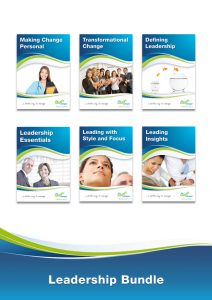 For more leadership resources look at our great-value guides. These include some excellent tools to help your personal development plan. The best-value approach is to buy our Leadership bundle, available from the store.
We’ve bundled together these five e-guides at half the normal price! Read the guides in this order, and use the tools in each, and you’ll be well on your way to achieving your personal development plan. (6 guides, 167 pages, 27 tools and 22 insights, for half price!)
- Leadership Essentials
- Defining Leadership
- Leading Insights
- Leading with Style and Focus
- Transformational Change
- Making Change Personal
Blog Content: Most blog pages on this site are from sponsored or guest contributors. Although we may receive payment for these, all posts are vetted to ensure they meet our editorial standards and offer value for our readers.
>> Return to the Leadership Knowledge Hub