From Employee to Business Owner: What the Transition Really Demands
20 July 2026
From Employee to Business Owner: What the Transition Really Demands
A Career Step That Changes Everything
The desire to become a business owner is one of the most consistent themes in professional life. For many ambitious managers and team leaders, building something of their own eventually becomes an ambition too strong to ignore. McKinsey’s 2026 analysis of the US small business landscape estimates that approximately six million businesses will change hands or exit over the next decade as their baby boomer owners retire — representing an extraordinary opportunity for people ready to step into ownership. In the UK, the picture is similarly active, with the Enterprise Research Centre’s State of Small Business Britain 2025 report identifying significant ownership transition across sectors.
But the transition from employee to business owner is considerably more complex than it first appears. It isn’t just a career move. It’s a change in how you work, how you think, how you measure your own progress, and how you define your professional identity. Getting these dimensions right matters as much as finding the right opportunity or securing the right funding.
This guide covers the main things to think about as you prepare to make the leap — honestly and in order.
Assessing Your Entrepreneurial Readiness
Before writing a business plan or looking for funding, the most important step is an honest self-assessment. Owning a business isn’t for everyone — not because some people lack capability, but because it requires a specific combination of traits that are genuinely different from what makes someone an excellent employee.
The questions worth sitting with
Can you handle sustained uncertainty without a manager to provide direction? Are you comfortable taking significant risks — financial and personal — without a guarantee of outcome? Do you have the self-discipline to stay focused and productive when nobody is setting your priorities or checking your output?
The most honest question is about motivation. Are you trying to escape a job or environment you dislike, or are you genuinely excited about a specific opportunity? The difference matters more than it might seem. Entrepreneurship motivated primarily by escape tends to encounter difficulties when the novelty fades and the hard parts of ownership become the daily reality. Entrepreneurship motivated by genuine belief in an idea or opportunity has considerably more resilience to draw on when things get difficult — as they inevitably will.
The Mindset Shift That Changes Everything
The transition from employee to business owner is fundamentally a mindset transition, and for many people it’s the hardest part. As an employee — even a senior one — your role is to perform excellently within a defined scope. As a business owner, you define the scope, set the strategy, and are ultimately accountable for every outcome.
From tasks to systems
The security of a regular salary gets replaced by the reality that income only arrives if the business generates it. New business owners must track 15 to 20 different performance indicators compared to the 3 to 5 KPIs most employees monitor, according to business metrics research. You are no longer optimising one function — you are balancing an entire ecosystem where marketing decisions affect cash flow, which affects hiring, which affects product quality. That shift in the complexity of what you’re responsible for is significant, and most people underestimate it.
Having a long-term vision becomes the primary navigational tool rather than a nice addition to a well-written CV. You stop reacting to tasks and start anticipating problems, creating conditions for growth, and making decisions in the absence of complete information. The mental shift from “what do I need to complete today” to “what does this organisation need to become” is one that many people find more challenging than any technical skill. Good goal setting and decision making practice is the foundation that makes that shift sustainable rather than exhausting.
Finding the Right Opportunity
Once the mindset preparation is underway, the practical question is which route into ownership fits your situation, risk tolerance, and available resources. The three main options each carry different trade-offs.
Starting from scratch
Building a new business from the ground up offers complete creative control and the satisfaction of creating something entirely your own. It also carries the highest risk — no existing customer base, no proven revenue, and all processes built from zero. This route suits people with a validated idea, relevant market knowledge, and the financial runway to sustain themselves through the early period before the business becomes profitable.
Buying a franchise
A franchise provides a proven business model, brand recognition, and structured support from the franchisor. The trade-offs are franchise fees, ongoing royalty payments, and considerably less freedom to adapt the model to your own preferences. For first-time business owners who want the support of an established system, a franchise can reduce the risk of early-stage failure — though it doesn’t eliminate it.
Acquiring an existing business
Purchasing an established business is often the most practical route for experienced managers making the transition. Finding a business for sale that fits your skills and experience can provide a head start: existing customers, an operational team, established processes, and a financial track record that makes funding considerably easier to secure. Lenders can assess past performance rather than future projections, which reduces the perceived risk. The due diligence required before acquisition is significant — understanding exactly what you’re buying, including any liabilities, dependencies, or operational vulnerabilities — but for those willing to do it carefully, acquisition can compress the time to viable business ownership considerably.
Understanding the Financial Reality
Business ownership requires a clear-eyed understanding of both business and personal finances — a combination that many first-time owners underestimate. The startup or acquisition costs are only part of the picture. Living costs continue during the period before the business generates consistent income, and that period is almost always longer than optimistic projections suggest.
Building the right financial foundation
Most new owners fund their ventures through a combination of personal savings, family support, and business loans. Understanding your full funding requirement before committing — including not just the business costs but also the personal costs of the transition period — is essential groundwork. A personal emergency fund covering at least six months of living expenses is standard advice for good reason: it removes the pressure of personal financial anxiety from the already demanding task of building a business, and allows you to make better decisions when the pressure is highest.
It’s also worth understanding the tax and legal structure options available from the outset. The differences between sole trader, limited company, and partnership structures have implications for liability, taxation, and the ability to bring in future investment that compound significantly over time. Professional advice at this stage costs considerably less than unpicking the wrong structure later.
Planning as a Navigation Tool, Not Just a Document
A business plan has two audiences: the external one (investors, lenders, potential partners) and the internal one — you. Its real value is as a thinking tool that forces you to work through every part of the business before the consequences of getting it wrong are real. A plan that lives in a drawer after the funding conversation is over has delivered only a fraction of its value.
What a useful plan actually contains
A strong plan includes a detailed and honest market analysis — not the market as you’d like it to be, but as it actually is, including where competitors are stronger and where gaps genuinely exist. It includes a clear description of the product or service and why it creates value for a specific customer. It includes an operational plan covering how the business will actually function day to day, from staffing to supply chain. And it includes financial projections for at least three years that are based on realistic assumptions rather than best-case scenarios. The Knowledge Hub on managing projects and change covers planning disciplines that apply directly to the business planning process — particularly around building in review points and managing the gap between plan and reality as conditions evolve.
The managers and professionals who make the most successful transitions to business ownership tend to be those who treated the planning phase as seriously as the operating phase — not rushing through it to get to the exciting part, but using it as an opportunity to identify and address the assumptions most likely to be wrong. That rigour pays back consistently once the business is running and decisions have to be made in real time, under pressure, with limited information.
Further Reading
- McKinsey: The Great Ownership Transfer — A New Era of Business Stewardship — McKinsey’s 2026 analysis of the unprecedented wave of small business ownership transitions expected over the next decade, with implications for buyers, sellers, and the broader economy. Read the article
- GOV.UK: Set Up a Business — The official UK Government step-by-step guidance on choosing a business structure, registering, and meeting legal obligations. The authoritative starting point for anyone setting up in the UK. Read the guidance
- Enterprise Research Centre: State of Small Business Britain 2025 — The most comprehensive annual overview of UK small business conditions, challenges, and ownership trends. Useful context for anyone considering buying or starting a business in the current environment. Read the report
Header image by: Austin Distel
Disclaimer
The content on this site is provided for general information and educational purposes only. It reflects the author’s views and experience and is not intended as professional financial, legal, or business advice. Starting or buying a business carries significant financial risk, and readers should seek appropriate professional guidance before making major decisions based on anything published here. The Happy Manager and Apex Leadership Ltd accept no liability for actions taken in reliance on the content of this article.
References
- McKinsey Institute for Economic Mobility (2026). The Great Ownership Transfer: A New Era of Business Stewardship. https://www.mckinsey.com/institute-for-economic-mobility/our-insights/the-great-ownership-transfer-a-new-era-of-business-stewardship
- Enterprise Research Centre (2026). The State of Small Business Britain 2025. https://www.enterpriseresearch.ac.uk/wp-content/uploads/2026/02/ERC-The-State-of-Small-Business-Britain-2025.pdf
- Morrison, M.D. (2026). How to Go From Employee to Business Owner and Actually Succeed. (Business metrics research on KPI complexity.) https://www.michaeldmorrison.com/mdmarticles/2026/3/25/how-to-go-from-employee-to-business-owner-and-actually-succeed
- GOV.UK. Set Up a Business. https://www.gov.uk/set-up-a-business
- BizScout (2026). Business Listings in Texas. https://www.bizscout.com/business-listings-in-texas
Leadership Resources
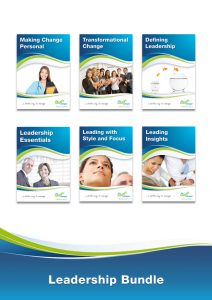 For more leadership resources look at our great-value guides. These include some excellent tools to help your personal development plan. The best-value approach is to buy our Leadership bundle, available from the store.
We’ve bundled together these five e-guides at half the normal price! Read the guides in this order, and use the tools in each, and you’ll be well on your way to achieving your personal development plan. (6 guides, 167 pages, 27 tools and 22 insights, for half price!)
- Leadership Essentials
- Defining Leadership
- Leading Insights
- Leading with Style and Focus
- Transformational Change
- Making Change Personal
Blog Content: Most blog pages on this site are from sponsored or guest contributors. Although we may receive payment for these, all posts are vetted to ensure they meet our editorial standards and offer value for our readers.
>> Return to the Leadership Knowledge Hub