Starting a Business: Eight Essentials That Give Your New Venture the Best Chance
9 June 2026
Starting a Business: Eight Essentials That Give Your New Venture the Best Chance
More Than a Great Idea
Starting a business in the UK has never been more accessible — or more competitive. There are 5.5 million private sector businesses in the UK as of 2024, and more than 750,000 new companies registered in a single year at the peak of recent startup activity. Yet nearly 60% of UK small businesses fail within their first five years, and only one in four successfully scales within that window. The gap between a promising idea and a sustainable business is real, and it’s rarely about the quality of the product or service alone.
What separates businesses that get traction from those that don’t tends to come down to preparation — the unglamorous work of building the right foundations before the exciting parts begin. For managers and leaders thinking about starting a business, or supporting someone who is, these eight essentials are where that preparation needs to focus.
1. A Clear Brand Identity
Every business needs something that distinguishes it from the competition, and brand identity is where that differentiation begins. It’s more than a logo — it encompasses the visual language, tone of voice, and values that make an organisation immediately recognisable and consistently credible.
Establishing brand identity early matters for a practical reason: the moment you begin working with external partners, collaborators, or suppliers, they need to know how to represent you. That means having clear guidelines on logo use, typography, colour palette, and the kind of language that does and doesn’t sound like your business. Creating a brand identity that’s coherent and considered from the outset is considerably easier than trying to impose consistency after the fact, when different versions of your visual identity have already spread across multiple channels.
For managers with experience of larger organisations, this is familiar ground. The same principles that make internal communications recognisable and trustworthy — consistency, clarity, a defined tone — apply to external brand building from day one.
2. A Business Plan Worth Using
A business plan is often treated as a bureaucratic requirement — something you produce for a bank or investor and then file away. The most useful business plans are living documents that genuinely inform decision-making. They don’t need to run to hundreds of pages. A clear outline of your goals, target audience, projected costs, revenue assumptions, and growth plans gives you a working framework to test decisions against and a benchmark to measure progress.
Why planning matters more than the plan
The real value of business planning isn’t the document itself — it’s the thinking the process forces. Working through a business plan requires you to confront questions you might otherwise defer: Who exactly is your customer? What does it actually cost to acquire one? How long before the business is self-sustaining? These questions are considerably more comfortable to grapple with on paper before launch than in practice six months in. If external funding is ever needed, lenders and investors will want evidence that you’ve thought through the fundamentals — but that’s a secondary benefit of work that’s valuable in its own right.
3. Reliable IT Support
Almost every business now has a significant online component, whether that’s a website, an e-commerce operation, email communication, or cloud-based tools for managing operations. When systems go down — and at some point they will — the cost isn’t just inconvenience. It’s missed orders, frustrated customers, and damage to the reputation you’ve been building.
Hiring a full-time IT professional is rarely practical for a new business, but that makes the case for outsourcing stronger rather than weaker. Specialist IT support covers the essentials — machine maintenance, data backup and recovery, security, and new equipment procurement — without the overhead of a permanent hire. For managers who’ve experienced the operational disruption of a system failure in a larger organisation, the argument for having reliable IT support in place from the start rather than scrambling to find it in a crisis will be immediately familiar.
4. A Funding Strategy
Every business needs capital to get started, and the source of that capital has implications beyond the immediate cash injection. Self-funding treats the investment as a returnable one — you retain full control, but you carry all the risk. A small business loan provides external capital with a defined repayment structure. Crowdfunding, which has grown significantly as a route to early-stage finance, validates market interest alongside raising funds — a successful campaign demonstrates that real people are willing to back what you’re building before it exists.
The right approach depends on the nature of the business, the scale of initial investment required, and how much equity or control the founder is willing to share. What matters most is having a clear funding strategy rather than improvising as each cash need arises. Running out of cash is one of the most common reasons new businesses fail — not because the idea was bad, but because the financial planning didn’t extend far enough ahead.
5. A Professional Website
A website is the first point of contact for a significant proportion of potential customers, and first impressions form quickly. Research consistently shows that users make judgements about a website’s credibility within the first few seconds of landing on it. If that first impression is a poorly designed, hard-to-navigate, or outdated site, many visitors will simply move on — regardless of how good the underlying product or service is.
A business website doesn’t need to be elaborate. It needs to clearly communicate who you are, what you offer, and how people can reach you. Think of it as a digital shopfront: the goal is to give a visitor enough confidence to take the next step, whether that’s making a purchase, submitting an enquiry, or picking up the phone. For managers used to thinking about customer experience in a physical or service context, the same principles apply online — clarity, ease of navigation, and a professional presentation that signals you can be trusted.
6. A Commitment to Customer Service
Products can be copied and prices can be matched, but the quality of a customer’s experience is harder to replicate. For new businesses, where every customer relationship matters and word-of-mouth recommendation carries disproportionate weight, getting customer service right from the start is one of the highest-return investments you can make.
The fundamentals aren’t complicated: respond to enquiries promptly, handle complaints professionally and without defensiveness, and make people feel that their business is genuinely valued rather than merely processed. Small businesses have a structural advantage here — the personal, attentive service that’s difficult for a large organisation to provide at scale is exactly what a new business can offer naturally. That advantage is worth protecting deliberately rather than letting it erode as the business grows. Good team management and motivation practice supports exactly this kind of sustained service quality.
7. Patience and Realistic Expectations
One of the most consistent patterns in startup failure is the gap between founders’ expectations of how quickly growth will come and the reality of how long it actually takes. Social media amplifies stories of overnight success while the years of grinding, iterating, and persisting that preceded them tend to go unreported. Most businesses take considerably longer to become profitable than their founders initially projected.
That doesn’t mean slow progress signals failure — it means the timeline for building something sustainable is longer than the highlight reel suggests. The managers and leaders who tend to build the most enduring businesses are those who can distinguish between a slow period that reflects normal business development and one that signals a genuine problem requiring a strategic response. Staying focused on the underlying indicators of progress — customer satisfaction, repeat business, referral rates — rather than headline revenue figures in the early months is a more useful discipline. The Knowledge Hub on goal setting and personal development offers relevant perspective on maintaining focus through the inevitable ups and downs of building something new.
8. A Social Media Presence That Reflects Your Brand
Social media is one of the fastest and most cost-effective ways to build awareness of a new business. It also carries the risk of doing more harm than good if it’s treated as an afterthought or updated inconsistently. A dormant social media presence — an account that hasn’t posted in months, or one where the content bears no relationship to the brand identity you’ve established elsewhere — tells a potential customer something about how seriously you take your business.
The most effective approach is focus over breadth. Choosing one or two platforms where your target audience is genuinely active, and investing in those consistently, produces better results than spreading effort thinly across every available channel. Understanding what content resonates with your specific audience takes time and experimentation. Guidance on how to build up a following and develop a loyal community is widely available, but the underlying principle is straightforward: consistent, on-brand content that genuinely serves your audience’s interests outperforms sporadic, self-promotional posting every time.
Preparation Is the Competitive Advantage
Starting a business is genuinely exciting, and the temptation to focus energy on the visible, creative elements — the product, the branding, the launch — is understandable. But the businesses that navigate their first five years successfully tend to be those that gave equal attention to the foundations: the plan, the finances, the systems, the customer experience, and the patience to build something properly rather than quickly.
For managers making the move from employment to entrepreneurship, the skills developed in leading teams — clear communication, systematic thinking, measured decision-making, and the ability to build trust with people — are more directly transferable than they might initially seem. Starting a business well is, in many respects, an exercise in applied management. The same disciplines that make a good manager make a prepared founder.
Further Reading
- Government Help and Support for UK Businesses — The Government’s central hub for business support, including guidance on starting up, funding options, employment, and compliance. The most authoritative reference for UK business requirements. https://www.business.gov.uk/
- British Business Bank: Start Up Loan — Guidance on government-backed personal loans of £500–£25,000 for new businesses, with free mentoring included. Businesses backed by the programme have a 69% five-year survival rate compared to 43% for comparable businesses. https://www.british-business-bank.co.uk/start-your-journey/finance-finder/start-up-loan
- Startups.co.uk: UK Small Business Statistics 2026 — A well-sourced overview of the current state of UK small business, including failure rates, growth patterns, and the challenges facing new ventures in 2026. Read the article
Header image by: Mikael Blomkvist
Disclaimer
The content on this site is provided for general information and educational purposes only. It reflects the author’s views and experience and is not intended as professional business, legal, financial, or tax advice. Starting a business carries inherent risks, and readers should seek appropriate professional guidance before making significant decisions based on anything published here. The Happy Manager and Apex Leadership Ltd accept no liability for actions taken in reliance on the content of this article.
References
- Airwallex (2025). 37 UK Small Business Statistics for 2025. https://www.airwallex.com/uk/blog/small-business-statistics-uk
- Startups.co.uk (2026). 47 UK Small Business Statistics to Know Your Market in 2026. https://startups.co.uk/analysis/small-business-statistics/
- Moneyzine (2025). Eye-Opening UK Startup Statistics for 2026. https://moneyzine.com/uk/resources/startup-statistics-uk/
- Warwick Business School / NatWest (2024). UK Start-Up Boom Hits Record High. https://www.wbs.ac.uk/news/uk-start-up-boom-hits-record-high/
- GOV.UK. Set Up a Business. https://www.gov.uk/set-up-a-business
Leadership Resources
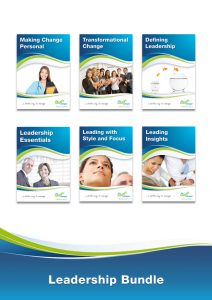 For more leadership resources look at our great-value guides. These include some excellent tools to help your personal development plan. The best-value approach is to buy our Leadership bundle, available from the store.
We’ve bundled together these five e-guides at half the normal price! Read the guides in this order, and use the tools in each, and you’ll be well on your way to achieving your personal development plan. (6 guides, 167 pages, 27 tools and 22 insights, for half price!)
- Leadership Essentials
- Defining Leadership
- Leading Insights
- Leading with Style and Focus
- Transformational Change
- Making Change Personal
Blog Content: Most blog pages on this site are from sponsored or guest contributors. Although we may receive payment for these, all posts are vetted to ensure they meet our editorial standards and offer value for our readers.
>> Return to the Leadership Knowledge Hub