Moving to the Next Level in Business: Why Leaders Get Stuck and How to Break Through
30 June 2026
Moving to the Next Level in Business: Why Leaders Get Stuck and How to Break Through
When Progress Stalls
Reaching the next level in business is something most managers and business leaders genuinely want — and genuinely struggle with. Not because they lack ability or ambition, but because the habits and patterns that got them to where they are often become the very things that prevent them going further. DDI’s Global Leadership Forecast 2025 found that 71% of leaders are under increased stress, with 40% considering stepping away from leadership roles entirely. Only 19% of managers report having strong delegation skills. These aren’t edge cases — they’re symptoms of leadership patterns that are common, recognisable, and largely preventable.
The frustrating part is that most of the obstacles to progression aren’t external. They’re internal: the decisions not taken, the work not handed over, the advice not sought, the data not examined. Understanding which of these patterns applies to you is the starting point for changing it.
You’re Guessing the Numbers
One of the most consistent habits of high-performing business leaders is their relationship with data. They know their numbers. Not in an obsessive, spreadsheet-every-hour way, but in the sense that they track the leading indicators that tell them whether the business is heading in the right direction before the results make it obvious.
Leading vs lagging indicators
Most managers pay attention to lagging indicators — revenue, profit, customer numbers — because these are the visible outcomes. What high performers also track are the leading indicators: the metrics that predict those outcomes before they arrive. In a service business, booking conversions tell you whether the front end is working. Client retention tells you whether the back end is healthy. In a product business, trial-to-purchase conversion rate, return visit frequency, or net promoter score might do the same job. The specific metrics vary by business, but the discipline is the same: don’t rely on gut feel when data is available, and build the habit of reviewing the right numbers regularly enough to act on them.
A simple weekly scorecard — four or five key metrics reviewed at the same time each week — creates the rhythm that separates businesses that respond to reality from those that respond to assumptions. If your current approach involves more intuition than evidence, that gap is worth addressing before anything else. Good decision making and goal setting practice is built on exactly this kind of disciplined measurement.
You Have Shiny Object Syndrome
The pace of change in business creates a constant stream of new opportunities, new models, and new ideas. For leaders who are ambitious and intellectually engaged, this is genuinely appealing — and genuinely dangerous. When attention is fragmented across too many directions simultaneously, progress in any single direction becomes difficult to sustain. The business doesn’t move forward; it moves sideways.
The discipline of singular focus
It’s generally a good idea to pursue one course of action as well as you possibly can, and then make changes if it becomes genuinely clear that it isn’t working. This is harder than it sounds. Most businesses that are struggling don’t need a new strategy — they need to execute their existing strategy with more consistency and patience. The temptation to pivot is often a response to discomfort with the slower-than-expected pace of progress rather than genuine evidence that the direction is wrong.
The practical discipline here is learning to say no — specifically, to opportunities that are interesting but not directly connected to the primary focus. This doesn’t mean ignoring everything new. It means creating a deliberate process for evaluating whether a new idea is genuinely better than what you’re currently doing, rather than simply being different. Most new ideas, tested honestly against that standard, don’t clear the bar.
You Aren’t Using Professional Coaching
Most people who have worked with a professional coach describe the experience in similar terms: they discovered things about how they operate that they couldn’t see from the inside. This is the core value of good coaching — not information transfer, but the creation of a clear, external perspective on patterns, behaviours, and blind spots that are invisible from within.
What coaching actually changes
Reviewing ‘The 7 Benefits of Hiring a Professional Coach‘ reveals a consistent theme: the biggest return comes not from tactical advice but from the illumination of the specific behaviours and assumptions that are holding performance back. Many leaders plateau not because they’ve run out of capability, but because they’ve run out of the kind of honest, informed external challenge that would tell them what to change. Internal feedback has limits — it’s filtered by relationships, by hierarchy, and by what people think the leader wants to hear. Good coaching bypasses all of that.
The initial experience can be uncomfortable. Coaching tends to surface things that are easier not to look at — patterns of avoidance, assumptions that haven’t been tested, habits that feel productive but aren’t. The leaders who get the most from it are those who can engage with that discomfort rather than deflecting it. The ones who resist tend to get politely challenging sessions and little change.
You Fear Delegation
Delegation is one of the most consistently underused management tools available, and the consequences of avoiding it compound over time. Only 19% of managers report strong delegation skills, according to DDI’s research. The leaders who hold on to too much — because they don’t trust others to do it as well, because handing over feels like losing control, or because they haven’t invested in developing the people around them — create a ceiling that the business can’t grow beyond.
The distinction between operator and leader
The purpose of a leader is to bring people together to create something worth creating — to set direction, make decisions that only they can make, and develop the people and structures that allow the business to function without requiring their personal attention at every stage. When a leader is doing the work that others could do, they’re not leading — they’re operating. That’s fine at the start of a business, when resource is limited and every pair of hands matters. It becomes a barrier to growth when it persists beyond that point.
Effective delegation isn’t about handing things over and hoping for the best. It involves being clear about what’s expected, providing the right support and resource, and maintaining appropriate oversight without micromanagement. Done well, it develops the people receiving delegated work, frees the leader to focus on genuinely strategic activity, and builds the organisational capability that allows the business to scale. The Knowledge Hub on managing performance and team development covers the management practices that make delegation work — rather than simply creating more stress on both sides.
Your Tech Stack Is Fragmented
Few things slow a business down as quietly and persistently as technology that doesn’t work together. When a CRM doesn’t connect to the email marketing platform, the business loses visibility over which customers are receiving which messages. When data has to be manually transferred between systems, time is wasted and errors are introduced. When project management software doesn’t reflect what’s actually happening in the business, decisions get made on incomplete information.
The audit that pays for itself
The fix is an honest audit of the current tech stack — what does the business actually use, what does it use effectively, and where are the manual workarounds that indicate a gap or a broken connection? This kind of audit tends to surface two things: tools that are being paid for but underused, and integration gaps that are consuming disproportionate time and creating unnecessary errors. Addressing both — by standardising on fewer, better-connected tools and documenting processes clearly — produces compounding efficiency gains that show up in output and in the quality of information available for decisions.
The common resistance is the time required. Getting the tech stack right feels like taking time away from the real work. In practice, a fragmented tech stack is already taking time — it’s just doing it invisibly, spread across dozens of small frictions and workarounds that individually seem trivial but collectively consume significant capacity.
You’re Stuck in the Owner Trap
The owner trap is the situation where the business stops functioning when the leader is absent. It’s a sign that the business hasn’t been built to run independently of its founder or most senior leader — and it creates a hard ceiling on both growth and personal freedom. A business that can only operate when a specific individual is present isn’t really a business; it’s a job that happens to employ other people.
Building a business that works without you
The path out of the owner trap runs through two things: people and process. On the people side, it requires bringing in management or leadership capacity that can genuinely carry functions the leader currently holds personally. This might mean a COO, a head of operations, or strengthened middle management — whatever the specific structure requires. On the process side, it means documenting how things work clearly enough that someone else can follow, audit, and improve the process without needing to check back constantly.
Neither of these is easy, and both require a genuine willingness to let go of control over the detail. But the leader who has built a business that functions well without their personal involvement in every decision has created something considerably more valuable than the leader who remains indispensable. That indispensability feels like success — but it’s actually a constraint.
Further Reading
- DDI: Global Leadership Forecast 2025 — Leadership Trends for 2026 — DDI’s analysis of the most pressing challenges facing leaders in 2026, including delegation, burnout, and the leadership pipeline crisis. Read the article
- Gearing for Growth: The Top 7 Challenges Facing Business Leaders in 2025 — A practical overview of the most common obstacles to leadership progression, with guidance on how to address each one. Read the article
- London Business School: 2026 Trends for Business — LBS faculty perspectives on the strategic challenges and opportunities shaping business leadership in 2026, including AI, resilience, and decision-making under uncertainty. Read the article
Header Photo by ThisisEngineering on Unsplash
Disclaimer
The content on this site is provided for general information and educational purposes only. It reflects the author’s views and experience and is not intended as professional business, legal, financial, or coaching advice. Every business and leadership situation is different, and readers should use their own judgement and seek appropriate professional guidance before making significant changes based on anything published here. The Happy Manager and Apex Leadership Ltd accept no liability for actions taken in reliance on the content of this article.
References
- DDI (2025). Global Leadership Forecast 2025: Leadership Trends for 2026. https://www.ddi.com/blog/leadership-trends-2026
- Gearing for Growth (2025). The Top 7 Challenges Facing Business Leaders in 2025. https://www.gearingforgrowth.com/blog/top-7-challenges-facing-business-leaders-in-2025/
- Enterprise Research Centre (2026). The State of Small Business Britain 2025. https://www.enterpriseresearch.ac.uk/wp-content/uploads/2026/02/ERC-The-State-of-Small-Business-Britain-2025.pdf
- London Business School (2026). 2026 Trends for Business. https://www.london.edu/think/2026-trends-for-business
- JP Morgan (2026). 2026 Business Leaders Outlook. https://www.jpmorgan.com/insights/markets-and-economy/business-leaders-outlook/2026-us-business-leaders-outlook
Leadership Resources
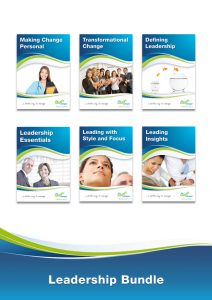 For more leadership resources look at our great-value guides. These include some excellent tools to help your personal development plan. The best-value approach is to buy our Leadership bundle, available from the store.
We’ve bundled together these five e-guides at half the normal price! Read the guides in this order, and use the tools in each, and you’ll be well on your way to achieving your personal development plan. (6 guides, 167 pages, 27 tools and 22 insights, for half price!)
- Leadership Essentials
- Defining Leadership
- Leading Insights
- Leading with Style and Focus
- Transformational Change
- Making Change Personal
Blog Content: Most blog pages on this site are from sponsored or guest contributors. Although we may receive payment for these, all posts are vetted to ensure they meet our editorial standards and offer value for our readers.
>> Return to the Leadership Knowledge Hub