Learning English: Strategies for Better Staff Retention
4 August 2026
Learning English: Strategies for Better Staff Retention
Why English Language Development Has Become a Management Priority
English language proficiency has shifted from a hiring filter to an active management concern. From January 2026, UK Skilled Worker visa applicants must demonstrate B2-level English across all four skills — reading, writing, speaking, and listening — up from the previous B1 standard. For managers sponsoring international hires, this change means language development now belongs explicitly in recruitment planning and onboarding support rather than being assumed.
The stakes go beyond compliance. Bridge Languages’ 2026 analysis of LinkedIn Workplace Learning data found that English is consolidating its role as a strategic enabler of collaboration, productivity, and competitiveness in hybrid and global organisations. Yet CEL’s Global Careers research identifies a consistent pattern: professionals who develop English primarily through formal study often fail to transfer that knowledge into operational fluency — the ability to communicate clearly under pressure, in meetings, in negotiations, and in the informal exchanges that actually move work forward.
The gap between knowing English and using it effectively at work is a retention and performance issue — and it’s one that managers in international teams are increasingly responsible for bridging. This guide covers five evidence-based strategies that genuinely help language learners retain English, alongside what managers can do to create the conditions in which those strategies work.
Use Memory Techniques That Actually Build Connections
Reading vocabulary lists repeatedly is one of the least effective ways to learn language. The brain retains information when it forms strong, multiple connections to it — which means passive repetition produces weak retention, while active, creative engagement produces strong retention.
Visualisation and association
Two of the most effective vocabulary techniques are visualisation and association. When learning a new word, forming a vivid mental image of it — imagining a “crowded” street, or picturing an “enormous” object — creates a visual anchor that makes retrieval considerably more reliable than a definition alone. Association techniques work by connecting a new word to something already known: “enormous” contains “norm,” meaning far beyond the normal — a connection that triggers retrieval in a way that a bare dictionary entry doesn’t.
There are various well-researched memorisation techniques worth exploring — from mnemonics and storytelling to the method of loci and chunking — each suited to different learners and different types of content. The common thread is that they all require active engagement rather than passive re-reading. For managers supporting international colleagues, encouraging this kind of deliberate learning — rather than assuming language exposure at work will be sufficient — reflects the same development mindset that produces results in any other skill area.
Spaced Repetition: The Most Evidence-Based Retention Method Available
Spaced repetition is built around one of the most reliable findings in learning science: the forgetting curve. Without reinforcement, we forget the majority of new information within days. The solution isn’t to study more — it’s to review at the right intervals, before forgetting sets in, then progressively extending those intervals as retention strengthens.
How it works in practice
The mechanics are simple. Review new material one day after learning it, then three days later, then a week later, then a month. Each review at the right moment tells the brain this information is worth keeping in long-term memory, and the next interval extends accordingly. This process is so effective it has become foundational for anyone preparing for intensive examinations — from medical students and those studying for A Levels to working professionals pursuing language certification for career advancement or visa compliance.
Apps like Anki and Quizlet automate the scheduling, removing the need to track intervals manually. But the principle holds regardless of the tool: a short daily review consistently outperforms a long weekly session. For managers supporting team members in language development, understanding this principle helps frame realistic expectations — genuine language acquisition takes time and requires regular practice, not intensive bursts followed by nothing.
Active Recall Over Passive Recognition
Active recall means forcing the brain to produce an answer from memory rather than simply recognising it when prompted. Reading a word and its definition is passive recognition — the brain confirms it knows the answer when it sees it. Testing yourself — looking at a word and generating the meaning without help — is active recall, and it’s considerably more effective at building the neural connections that enable fluent, reliable use.
Practical active recall techniques for workplace English
Flashcards are a classic active recall tool, but only when used correctly. The discipline is to answer from the question side before checking — committing to a response before confirming it. Beyond flashcards, several approaches work particularly well for workplace English: explaining a concept or procedure in English without looking at notes, writing a summary or email using new vocabulary without reference materials, watching a short video in English and then summarising it aloud. These techniques mirror the actual demands of professional English use — where retrieval has to happen under time pressure, in real conversations, without the option of pausing to look things up.
- Explain a grammar concept or procedure in your own words without reference
- Write sentences using new vocabulary without checking a dictionary
- Watch a short video in English and summarise it aloud immediately afterwards
Structured Scheduling That Matches How Language Learning Works
All of these techniques work better within a consistent routine. Language acquisition is cumulative and incremental — it builds through regular, sustained engagement rather than occasional intensive sessions. A well-structured study schedule makes the habits automatic rather than requiring willpower every time.
What works better than marathon sessions
Twenty to thirty minutes of focused practice daily outperforms two hours once a week — both for retention and for the gradual development of fluency that comes from keeping language active in working memory. A balanced weekly schedule that covers different skills — vocabulary on one day, grammar on another, listening on a third — ensures development across the full range rather than over-indexing on the areas that feel most comfortable.
For managers building language development into team support, this has a practical implication. Short, frequent practice is more effective than occasional intensive training days. Protected time for regular practice — even fifteen minutes in a working day — produces better results than sporadic longer sessions. The same principle applies to almost any skill development programme: consistency beats intensity. Good managing performance and personal development practice builds this kind of structural support into how development is resourced rather than leaving it entirely to individual motivation.
Getting Past the Plateau
Every language learner eventually hits a plateau — a period where effort continues but visible progress seems to stall. This is a normal feature of language acquisition, not a sign that something is wrong. At the plateau stage, the brain has typically consolidated the material it has been working with and needs new inputs or new challenges to continue developing.
What breaks a learning plateau
The most effective response is to change the approach. If study has been primarily grammar-focused, switching to real-world content — podcasts, articles, videos on topics of genuine interest — provides new vocabulary in natural context. A language exchange partner creates the pressure and authenticity that structured study can’t replicate. Attempting to follow a film or podcast without subtitles pushes the listening skills that formal study often underdevelops.
For managers supporting international team members who seem to have plateaued, the most useful question is what kind of English they actually need to use more confidently at work. The shift from studying English to using English — in real meetings, in written communications, in casual conversation — is where operational fluency develops. Bridge Languages’ 2026 research identifies applied learning, directly connected to real workplace tasks like presentations, international client management, and remote leadership, as producing the fastest and most durable transfer into professional capability. Creating opportunities for that kind of authentic use — rather than just recommending more study — is where management support makes the most direct difference.
Further Reading
- Bridge Languages: 2026 Trends — English as a Competitive Advantage in Hybrid Environments — Analysis of how English language development is being integrated into L&D strategy in global organisations, including the shift toward applied learning connected to real workplace tasks. Read the article
- Hello Nabu: How to Learn English for Work (2026 Guide) — A practical, role-specific guide to building workplace English skills, covering meeting language, professional writing, and the B2 standard most international employers now expect. Read the guide
- Jobbatical: UK Skilled Worker Visa English Requirement Changes 2026 — A clear, practical overview of the B2 English requirement that came into force in January 2026, including what it means for employers sponsoring international hires and how to build preparation time into the recruitment timeline. Read the guide
Header image by: Unsplash
Disclaimer
The content on this site is provided for general information and educational purposes only. It reflects the author’s views and experience and is not intended as professional language teaching, immigration, or HR advice. English language requirements for UK visas are subject to change — readers should verify current requirements with UKVI and seek appropriate professional guidance. The Happy Manager and Apex Leadership Ltd accept no liability for actions taken in reliance on the content of this article.
References
- Jobbatical (2026). UK Skilled Worker Visa English Requirement Elevated to B2. (January 2026 implementation details.) https://www.jobbatical.com/blog/english-language-requirement-elevated-to-b2-skills-change
- Bridge Languages (2026). 2026 Trends: English as a Competitive Advantage in Hybrid Environments. (LinkedIn Workplace Learning Report 2025; applied learning research.) https://bridge.edu/languages/en/2026-trends-english-competitive-advantage-hybrid-work/
- CEL English College (2026). English for Global Careers 2026: What Employers Expect. (Operational fluency vs formal study; CEL Career Transfer Model.) https://www.englishcollege.com/post/english-for-global-careers-2026
- Hello Nabu (2026). How to Learn English for Work: 2026 Guide. https://www.hellonabu.com/blog/en/how-to-learn-english-for-work/
- Preply (2025). Level of English Required to Work in an International Company. https://preply.com/en/blog/b2b-level-of-english-required-to-work-in-an-international-company/
Leadership Resources
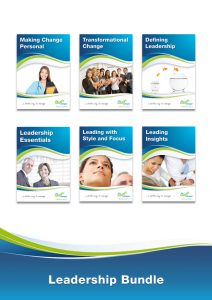 For more leadership resources look at our great-value guides. These include some excellent tools to help your personal development plan. The best-value approach is to buy our Leadership bundle, available from the store.
We’ve bundled together these five e-guides at half the normal price! Read the guides in this order, and use the tools in each, and you’ll be well on your way to achieving your personal development plan. (6 guides, 167 pages, 27 tools and 22 insights, for half price!)
- Leadership Essentials
- Defining Leadership
- Leading Insights
- Leading with Style and Focus
- Transformational Change
- Making Change Personal
Blog Content: Most blog pages on this site are from sponsored or guest contributors. Although we may receive payment for these, all posts are vetted to ensure they meet our editorial standards and offer value for our readers.
>> Return to the Leadership Knowledge Hub