How to Choose an AI Programme That Fits Your Career
3 October 2026
Every AI programme can look remarkably similar on paper. Many promise practical skills, industry relevance and a route into a fast-changing field. The harder question is not whether you should learn AI. It is which kind of AI knowledge will still be useful in your work six months from now.
That is why the smartest starting point is often the job you want to do, not the technology you want to learn. If you are comparing options, whether a university short course or something like a certificate in ai in Singapore, look closely at whether the programme lets you build skills around a specific role or application area. A list of broad AI topics is not the same thing. The practical tests below will help you choose an AI programme that fits your career before you enrol.
A Note on the Examples Used
The worked examples in this article come from one provider, NUS-ISS in Singapore. The questions apply wherever you study, but fees, funding and entry requirements vary by country and provider. Check any programme’s current details directly, because structures and costs change.
Start With the Work
Imagine you work in operations and spend hours reviewing customer messages. A course on language processing and conversational systems has a clearer link to your daily work than a broad introduction that touches ten unrelated subjects. The same logic applies if you work with financial data, computer vision or automation. Ask which problem you want to become better at solving, then work backwards to the technical skills you need.
This also makes your learning easier to explain to an employer. “I studied AI” is vague. “I learnt how machine learning can be applied to pattern recognition” tells a much clearer story.
Look for Programmes That Name the Job Role
Some providers make this easier by tying each qualification to a job. The NUS-ISS stackable AI programme says each of its graduate certificates is aligned to a specific role. Its language processing certificate points towards jobs such as chatbot developer and NLP engineer, while its sensing certificate points towards computer vision work. A programme that names its target roles lets you test it against your own plans.
Broad Skills Have a Cost
There is a trade-off that many course comparisons miss. A broader AI programme gives you exposure to more areas, but that does not make you more capable in any one of them. Think of learning several instruments for ten minutes each. You would recognise the sounds without being ready to perform. AI learning can work the same way.
A useful programme gives you enough depth to apply what you learn. Look for a structure that moves from concepts into practical work, rather than stopping at definitions and demonstrations. Each NUS-ISS graduate certificate, for instance, finishes with a practice module after its taught courses.
Check How Learning Stacks
One feature worth investigating is whether individual units can build towards a larger qualification. This matters if you work full-time and cannot disappear into a classroom for a year.
A stackable pathway lets you complete smaller certificates first and decide later whether to continue. The NUS-ISS pathway leads to a Master of Technology in Artificial Intelligence Systems. Students complete two fundamental graduate certificates, any two of five specialist certificates, and then a capstone project. The programme allows five years for the certificates and two more for the capstone, though it says most participants finish sooner.
You Do Not Have to Stack
Stacking is an option, not an obligation. The programme states that professionals who choose not to stack still benefit from individual courses or single graduate certificates, which it describes as an equally valid way to gain AI skills. That changes the decision. Instead of asking only whether you can afford a full degree, you can ask whether you can make progress without putting your current career on hold.
Match the Certificate to Your Role
Before enrolling, write down the three tasks you most want to handle better at work. Then compare them with the actual modules and outcomes of each AI programme. Your shortlist might include:
- Building systems that process text
- Analysing images or sensor data
- Designing or deploying AI solutions
If a programme’s subject areas keep connecting with your list, that is a useful signal. If you find interesting modules with little connection to your work, pause before you sign up.
The NUS-ISS pathway groups its certificates around reasoning systems, pattern recognition, sensing systems, language processing, robotics, financial risk management and AI systems architecture. Each one maps to a different kind of task, so the list you wrote earlier does most of the sorting for you.
Do the Time Calculation
Here is a simple decision rule. Work out how much learning time you can consistently protect each week before you look at any timetable. Suppose you can realistically spare six hours. A programme that needs ten hours every week may look excellent but become hard to sustain after the first month. A shorter AI programme you finish properly can teach you more than a larger one that keeps getting pushed aside. If time is your main constraint, our time management knowledge hub has practical ways to protect it.
Read the Whole Structure
Check how courses are grouped, because the total commitment can differ from what a title suggests. The NUS-ISS certificates combine several short courses, typically three to five days each, with a separate practice module. Add those pieces up before you judge whether the workload fits.
Avoid the Certificate Trap
The common mistake is choosing a certificate because it sounds impressive, not because it closes a real skills gap. You can end up with a qualification you struggle to explain in an interview. You may remember the terminology yet feel unsure when asked what you built, analysed or improved.
A better test is simple. Finish this sentence before you enrol: “After completing this, I want to be able to ______.” If you cannot fill the blank with a specific task, problem or responsibility, keep comparing your options.
Why Specific Goals Work
Goal-setting research supports this approach. Edwin Locke and Gary Latham’s 2002 review of 35 years of studies found that specific, challenging goals tend to produce better performance than a vague intention to do your best. Our guide to SMART goals shows how to turn a loose ambition into a goal you can measure.
Final Thoughts
The strongest AI learning choice is rarely the one with the longest list of buzzwords. Start with the work you want to do, and check that a programme names the roles it serves and gives you enough depth to apply what you learn. Look at how learning stacks, so you can progress without pausing your career, and test the weekly workload against the hours you can really protect. Before you enrol, complete the sentence about what you want to be able to do. If the answer is specific, the right AI programme is much easier to spot.
Disclosure and Disclaimer
This is a partnered post. See our disclosure policy for details. The content on this site is provided for general information and educational purposes only. It is not intended as professional career, education or financial advice. Course structures, fees, funding schemes and entry requirements vary between providers and countries and change over time. UK readers should check a provider’s accreditation and any government-backed funding support before enrolling. US readers should check a provider’s accreditation and their eligibility for any federal or employer-funded tuition support. Readers considering programmes in Singapore should confirm current funding eligibility directly with SkillsFuture Singapore and the provider. Readers should seek qualified professional advice for their specific situation. The Happy Manager and Apex Leadership Ltd accept no liability for actions taken in reliance on the content of this article.
Further Reading
- Upskill with MySkillsFuture — SkillsFuture Singapore: The official gateway to course subsidies, funding schemes and free one-to-one Skills and Training Advisory consultations for people planning their next step. Read the guide
References
- NUS Institute of Systems Science (n.d.), Stackable Graduate Certificate Programme in Artificial Intelligence (pathway to a Master of Technology in Artificial Intelligence Systems; certificates aligned to job roles; two fundamental and two of five specialist certificates plus a capstone project). https://www.iss.nus.edu.sg/stackable-certificate-programmes/intelligent-systems
- Locke, E. A. and Latham, G. P. (2002), Building a practically useful theory of goal setting and task motivation, American Psychologist 57(9) (specific, difficult goals outperform vague “do your best” goals). https://doi.org/10.1037/0003-066X.57.9.705
Header image by Peggy und Marco Lachmann-Anke from Pixabay
Leadership Resources
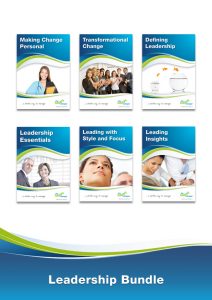 For more leadership resources look at our great-value guides. These include some excellent tools to help your personal development plan. The best-value approach is to buy our Leadership bundle, available from the store.
We’ve bundled together these five e-guides at half the normal price! Read the guides in this order, and use the tools in each, and you’ll be well on your way to achieving your personal development plan. (6 guides, 167 pages, 27 tools and 22 insights, for half price!)
- Leadership Essentials
- Defining Leadership
- Leading Insights
- Leading with Style and Focus
- Transformational Change
- Making Change Personal