Choosing Legal Representation for a Wrongful Death Claim: What Managers and HR Teams Need to Know
17 September 2026
When a worker is killed in a workplace accident, the legal process that follows is more complex than a standard personal injury matter — because the injured person cannot speak for themselves. The evidence must be built entirely from documentation, witness accounts, expert testimony, and records that may have already begun to deteriorate. Securing strong wrongful death claim representation early in the process is one of the most important decisions a family or organisation can make — and this paid partnership article helps managers and HR teams understand what to look for when specialist legal counsel is needed, whether selecting representation for the organisation, supporting a bereaved family in understanding their options, or ensuring the incident response positions the organisation as constructively as possible for what follows.
Note for Non-US Readers
The management principles in this article — how to evaluate specialist legal representation, what the investigation process involves, and what managers should understand about how wrongful death cases are built — apply in any jurisdiction where workplace fatalities lead to civil claims. The specific legal framework discussed draws on US wrongful death law. UK readers will find the equivalent framework in the Fatal Accidents Act 1976, employer liability law, and the HSE’s enforcement powers under the Health and Safety at Work Act 1974, which run alongside any civil claim. The legal details differ; the need for specialist representation when a workplace death leads to a claim does not.
Why This Is a Management Decision
A wrongful death claim arising from a workplace fatality typically involves multiple simultaneous processes: a regulatory investigation by HSE (in the UK) or OSHA (in the US), a coroner’s inquest or similar inquiry, an insurance claim, and the civil wrongful death action itself. These processes do not proceed independently — evidence gathered in one is often relevant to another, and the organisation’s conduct in each affects its position in the rest.
For managers and HR teams, understanding what strong wrongful death claim representation looks like — what specialists do, how they investigate, and what separates a well-handled case from a poorly handled one — is a practical management competency. It informs both how the organisation selects its own counsel and how it responds to the family’s legal process. Good leadership and decision making practice treats the legal aftermath of a workplace fatality as something to be navigated proactively and professionally rather than reactively and defensively.
What a Wrongful Death Claim Involves
A wrongful death claim generally arises when a person dies because of another party’s negligence or failure to meet a legal duty. In a workplace context, this might follow a construction accident, a vehicle incident, equipment failure, or exposure to hazardous conditions. Unlike a personal injury claim, the deceased cannot give evidence. The legal team must establish what happened, who was responsible, and how the death affected surviving family members — using documentation, witness accounts, expert evidence, and records that may have been available only at the scene immediately after the incident.
The damages recoverable in a wrongful death claim typically include economic losses — the financial support the deceased would have provided to dependants — and non-economic losses including the loss of companionship, care, and guidance. In the US, the specific recoverable heads of loss vary by state. In the UK, the Fatal Accidents Act 1976 provides for dependency claims on behalf of qualifying dependants, bereavement damages (currently £15,120 for a qualifying claimant), and funeral expenses. The Law Reform (Miscellaneous Provisions) Act 1934 allows the estate to claim for the deceased’s own losses prior to death, including pain and suffering where the death was not immediate.
Evaluating Legal Representation: What to Ask
Whether the organisation is selecting counsel to manage or defend a wrongful death claim, or a manager is supporting a bereaved family in understanding their options, the same evaluation framework applies. Specialist experience matters more in wrongful death cases than in most other legal matters — because the investigation, the evidence requirements, and the damages calculation are all more complex than in a standard personal injury claim.
The questions worth asking of any potential legal representative are specific. Does the firm regularly handle wrongful death matters specifically, not personal injury broadly? Who will personally work on the case, and what is their track record with fatal incident claims? How does the firm approach the investigation — what evidence do they prioritise, and how quickly do they move to secure it? What is their experience with the specific type of incident involved — construction, vehicle, industrial, or other? And how do they communicate with families and other parties throughout the process, given the particular emotional complexity of these cases?
The answers to these questions distinguish firms with genuine specialist capability from those handling wrongful death matters alongside a broader personal injury caseload where fatal cases represent a small proportion of the work. In matters with this level of human and financial consequence, that distinction matters.
The Investigation Is Where Cases Are Built or Lost
A strong wrongful death case begins with a careful, prompt investigation. The window in which the most valuable evidence exists is often very short. Physical conditions change as the site resumes operation. CCTV footage is overwritten. Witnesses’ recollections become less reliable and may be influenced by subsequent discussions. The materials the investigation needs to build a complete picture of what happened — accident reports, medical records, photographs and video of the scene, equipment records, employment and income records, expert analysis — are most complete and most reliable immediately after the incident.
For managers, the implications run in both directions. The organisation’s own investigation and evidence preservation in the immediate aftermath — the steps covered in our companion article on construction site accidents — directly affects what any subsequent legal process has to work with. An organisation with thorough contemporaneous documentation of the incident, its response, and its safety management practices before the event has a considerably stronger foundation for the legal process that follows than one whose records are incomplete or assembled retrospectively.
The investigation may also involve accident reconstruction experts, medical specialists to address causation, and occupational health experts to address the impact on survivors. In complex multi-party cases — where more than one employer, contractor, or equipment supplier may share responsibility — establishing each party’s contribution requires exactly this kind of specialist technical analysis alongside the legal work. Good managing projects and managing change practice builds the documentation discipline that makes this investigation as productive as possible before it is ever needed.
Supporting Families While Managing the Organisation’s Position
One of the more difficult management challenges following a workplace fatality is navigating the tension between the organisation’s legal interests and its human obligations to the bereaved family. These are not as incompatible as they might initially appear. An organisation that responds with transparency, genuine care, and practical support — facilitating access to information and specialist advice — typically produces better outcomes both for the family and for its own eventual legal position than one that treats every interaction as a liability risk to be managed.
Families who feel the organisation has acted with honesty and humanity are more likely to engage constructively through what is inevitably a difficult process. Organisations that disengage — leaving families to navigate the legal, financial, and practical consequences of the death without any organisational support — tend to face more adversarial legal processes and greater reputational damage. The management principle is consistent with good leadership more broadly: doing the right thing by the people affected, clearly and promptly, tends to produce better outcomes than the alternative across almost every dimension.
Final Thoughts
Choosing the right legal representation for a wrongful death claim — whether for the organisation or in understanding what the family is going through — is a decision with significant consequences for how the process unfolds and what outcome it produces. Specialist experience, prompt investigation, technical capability, and clear communication are the qualities that distinguish representation that serves the case from representation that is merely present for it. For managers and HR teams, understanding these qualities in advance — before a workplace fatality occurs — is the kind of preparation that rarely feels urgent until suddenly it is essential.
Disclosure and Disclaimer
Our blog posts are paid partnerships, unless stated otherwise. See our disclosure policy for details. The content on this site is provided for general information and educational purposes only. It is not intended as professional legal, HR, or management advice. Wrongful death law and employer obligations vary significantly by jurisdiction. UK readers should refer to current HSE guidance and seek qualified legal advice. US readers should note that rules vary by state. The Happy Manager and Apex Leadership Ltd accept no liability for actions taken in reliance on the content of this article.
Further Reading
- HSE: Investigating Accidents and Incidents — A Workbook for Employers — The Health and Safety Executive’s practical guidance on conducting workplace incident investigations, covering evidence gathering, witness interviews, root cause analysis, and how investigation findings feed into both regulatory and civil legal processes. Read the guide
- Cardinus: Workplace Fatalities 2026 — What Employers Can Learn — A practical employer-focused analysis of the 2025/26 HSE fatality data and its implications for safety management practice, employer obligations, and the legal exposure that follows when those obligations are not met. Read the article
- ACAS: If Someone at Work Dies — Guidance for Employers — ACAS guidance on how employers should handle the death of an employee, covering the immediate management response, communicating with the team and the deceased’s family, supporting bereaved colleagues, and the practical and legal obligations that arise. Read the guidance
References
- HSE (2026). Work-Related Fatal Injuries in Great Britain 2025/26 (Provisional). (126 worker deaths; construction highest sector; falls from height leading cause.) https://www.hse.gov.uk/statistics/fatals-overview.htm
- Compensation Calculator UK (2025). Fatal Accident Claim Guide. (Fatal Accidents Act 1976 dependency claims; Law Reform Act 1934 estate claims; bereavement damages £15,120.) https://www.compensationcalculatoruk.co.uk/personal-injury-claims/wrongful-death-settlement-calculator/
- Accident Claims UK (2025). Death at Work Compensation Claims Guide. (Three-part negligence test; qualifying dependants; investigation requirements in workplace fatality claims.) https://www.accidentclaims.co.uk/death-fatal-accident-compensation/death-at-work-compensation/
Header Image by Venita Oberholster from Pixabay
Leadership Resources
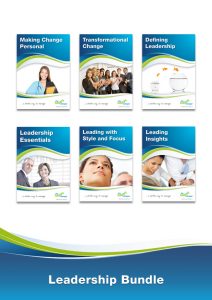 For more leadership resources look at our great-value guides. These include some excellent tools to help your personal development plan. The best-value approach is to buy our Leadership bundle, available from the store.
We’ve bundled together these five e-guides at half the normal price! Read the guides in this order, and use the tools in each, and you’ll be well on your way to achieving your personal development plan. (6 guides, 167 pages, 27 tools and 22 insights, for half price!)
- Leadership Essentials
- Defining Leadership
- Leading Insights
- Leading with Style and Focus
- Transformational Change
- Making Change Personal