Competitive Edge: How Business Professionals Can Keep Moving Forward in 2026
23 June 2026
Competitive Edge: How Business Professionals Can Keep Moving Forward in 2026
Why Experience Alone Stops Being Enough
A competitive edge at work is rarely handed over. It’s built — through deliberate learning, consistent habits, and the kind of strategic thinking that makes decision-makers take notice. Yet many professionals reach a point in their careers where experience alone no longer creates meaningful differentiation. The work keeps coming, but the opportunities stop.
The data reflects this. 46% of CHROs now cite leadership and manager development as their top priority for 2026 — the second consecutive year it has ranked first, according to SHRM’s annual research. At the same time, 82% of UK managers entering a management position have had no formal management or leadership training, according to the Chartered Management Institute. That gap — between what organisations need and what most managers currently have — is precisely where a competitive edge gets built.
This article covers five areas where deliberate investment tends to produce the most durable professional advantage: continued education, strategic thinking, daily habits, interpersonal effectiveness, and sustainable performance.
Continued Learning Remains One of the Strongest Differentiators
Professionals who stop learning after establishing themselves often find their advantage eroding quietly over time. Industries shift. Expectations evolve. The knowledge and frameworks that drove early success become familiar to more people and cease to be distinctive.
Formal education as a career accelerator
For professionals interested in leadership, finance, and organisational decision-making, structured postgraduate education provides both depth of knowledge and a signal to employers that someone is serious about their development. Online MBA finance programmes — such as the accredited offering from Northwest Missouri State University — combine advanced financial management, investment analysis, and managerial decision-making in a format designed around working professionals. The programme can be completed in as few as 12 to 18 months, making it genuinely accessible alongside full-time work.
The return on this kind of investment is well-evidenced. Organisations with structured leadership development programmes are 2.4 times more likely to hit their performance targets. Leadership development delivers an average 10:1 return on investment when well-designed programmes are properly implemented. Beyond the technical knowledge, postgraduate education develops critical thinking, sharpens analytical ability, and exposes professionals to a wider range of business perspectives — all of which translate into more effective leadership.
Continuous learning as a daily discipline
Formal education isn’t the only route. Professionals who stay genuinely curious — who read widely, seek feedback regularly, and treat each project as a source of learning rather than simply a task to complete — develop a compounding advantage over time. 94% of employees say they would stay longer at a company that invests in their learning and development. The professionals who do this proactively, without waiting for an employer to provide the opportunity, consistently outpace those who don’t.
Strategic Thinking: From Doing to Directing
Technical expertise opens doors in a career. Strategic thinking keeps them open. Organisations value people who understand how individual decisions connect to broader objectives — and who can operate effectively in conditions of uncertainty and incomplete information.
What strategic thinking actually involves
As strategic thinking becomes increasingly important at senior levels, the ability to evaluate risks, identify opportunities, and understand the long-term implications of decisions becomes the differentiating factor between managers who execute and managers who lead. Strategic thinkers don’t just respond to what’s in front of them — they maintain a view of where the organisation is heading and position their team’s work accordingly.
Leaders who think strategically drive significant competitive advantage for their organisations. Organisations that prioritise strategic leadership development are 4.2 times more likely to outperform their peers, according to Promark’s 2025 analysis. For individual managers, developing this capability means deliberately stepping back from the operational detail often enough to ask the larger questions: Where is this heading? What are we preparing for? What trade-offs are we making?
The Knowledge Hub on decision making and goal setting explores the practical frameworks that support this kind of strategic clarity — particularly useful for managers making the transition from technical expert to organisational leader.
The Daily Habits That Build Professional Credibility
Career success is shaped by skills, but it’s also built through consistent daily behaviour. Trust accumulates through small actions performed reliably over time — not through occasional impressive performance. Professionals who demonstrate this kind of reliability become people that others depend on, recommend, and promote.
The habits that tend to matter most are familiar but easily deprioritised under pressure:
- Staying informed about industry developments and sharing relevant insights with the team
- Actively seeking feedback and visibly acting on it — not just receiving it
- Building and maintaining strong professional relationships, including with people outside your immediate team
- Improving communication skills continuously, particularly written and presentation skills
- Taking initiative when challenges arise rather than waiting for someone else to respond
- Pursuing learning opportunities proactively, before they’re offered or required
None of these are complicated. What makes them differentiating is consistency. The professional who does all of these things reliably, week after week, builds a reputation that compounds — creating opportunities that wouldn’t otherwise appear and a degree of trust that’s difficult to replicate quickly.
Success Requires More Than Performance Metrics
Measurable results clearly matter. But organisations increasingly recognise that long-term success depends on more than productivity alone. Strong professionals understand the importance of collaboration, communication, and sustainable performance — and they actively develop these alongside technical capability.
The interpersonal dimension of leadership
Leadership effectiveness is closely tied to interpersonal skill. Teams function better when communication is clear, expectations are well understood, and working relationships are managed with genuine care. Managers who invest in these qualities — who listen carefully, give feedback consistently, and treat the people around them with respect and transparency — tend to build teams that outperform those led by technically capable but interpersonally disengaged managers.
70% of team engagement is determined by the manager alone, according to Gallup’s research. That’s a remarkable figure. It means that a team’s motivation, commitment, and performance largely reflects the quality of its leadership — not just the quality of its individual members. Developing the interpersonal skills that drive engagement isn’t soft work. It’s one of the highest-leverage investments a manager can make. Good workplace wellbeing and team leadership practice directly supports this kind of sustained interpersonal effectiveness.
Managing stress and sustaining performance
Professionals who manage their own wellbeing effectively are better positioned to sustain high performance over time. The relationship between personal resilience and professional effectiveness is well evidenced — managers who are chronically overloaded become less effective decision-makers, less empathetic leaders, and less reliable in the consistency that builds professional credibility. Treating personal wellbeing as a professional discipline, rather than something that competes with professional ambition, is a mark of genuine career maturity.
The Competitive Edge Is Built Over Time, Not Found Suddenly
The most competitive professionals rarely rely on a single achievement to distinguish themselves. Their advantage accumulates through consistent learning, strategic thinking, strong relationships, and a sustained commitment to improvement. Each deliberate choice adds to a foundation that becomes increasingly difficult for others to replicate.
What separates professionals who remain competitive from those who plateau is often simply the willingness to keep growing after they’ve already achieved early success. The professionals who make this a habit — who treat development as an ongoing discipline rather than something that happens in formal training cycles — build advantages that compound quietly but powerfully over the course of a career.
Industries will keep evolving. The skills that differentiate today will become more widely distributed tomorrow. The most reliable response to that reality isn’t to find a permanent advantage — it’s to build the habit of continuous development that generates new ones.
Further Reading
- SHRM: 2026 CHRO Priorities and Perspectives — The annual survey of senior HR leaders on their top priorities, including leadership development, employee experience, and AI integration. Essential context for understanding where organisational investment in people is heading. Read the research
- Exec Learn: 29 Eye-Opening Leadership Development Statistics 2025 — A well-sourced collection of current data on leadership development investment, ROI, and the gap between leadership need and leadership capability. Read the article
- Culture Partners: Leadership Development — A Complete Guide to Building Future-Ready Leaders in 2026 — A comprehensive guide to the business case for leadership development, including return on investment data and practical implementation frameworks. Read the guide
Header image by: RDNE Stock project
Disclaimer
The content on this site is provided for general information and educational purposes only. It reflects the author’s views and experience and is not intended as professional career, HR, or educational advice. Every professional’s situation is different, and readers should use their own judgement before making career or development decisions based on anything published here. The Happy Manager and Apex Leadership Ltd accept no liability for actions taken in reliance on the content of this article.
References
- SHRM (2026). 2026 CHRO Priorities and Perspectives. https://www.shrm.org/about/press-room/what-will-work-look-like-in-2026–new-shrm-research-reveals-how-
- Chartered Management Institute (2025). Management Training and Leadership Development in the UK. Referenced in: Kinkajou Consulting (2026). https://www.kinkajouconsulting.com/post/topleadershipdevelopmentstatistics
- Culture Partners (2026). Leadership Development: A Complete Guide to Building Future-Ready Leaders in 2026. https://culturepartners.com/insights/leadership-development-a-complete-guide-to-building-future-ready-leaders-in-2026/
- Promark (2025). Essential Leadership Skills for 2026: A Strategic Guide for Cutting-Edge Organizations. https://www.promarkcpi.com/2025/12/19/essential-leadership-skills-for-2026-a-strategic-guide-for-cutting-edge-organizations/
- Gallup (2025). State of the Global Workplace 2025. Referenced in: Kinkajou Consulting (2026). https://www.kinkajouconsulting.com/post/topleadershipdevelopmentstatistics
Leadership Resources
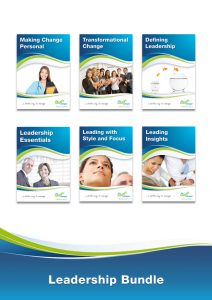 For more leadership resources look at our great-value guides. These include some excellent tools to help your personal development plan. The best-value approach is to buy our Leadership bundle, available from the store.
We’ve bundled together these five e-guides at half the normal price! Read the guides in this order, and use the tools in each, and you’ll be well on your way to achieving your personal development plan. (6 guides, 167 pages, 27 tools and 22 insights, for half price!)
- Leadership Essentials
- Defining Leadership
- Leading Insights
- Leading with Style and Focus
- Transformational Change
- Making Change Personal
Blog Content: Most blog pages on this site are from sponsored or guest contributors. Although we may receive payment for these, all posts are vetted to ensure they meet our editorial standards and offer value for our readers.
>> Return to the Leadership Knowledge Hub