Business Events: Five Ways Managers Can Make a Great First Impression
11 June 2026
Business Events: Five Ways Managers Can Make a Great First Impression
Why Business Events Still Matter
Business events have made a strong comeback. Attendance reached 92% of pre-pandemic levels in 2024, according to the Events Industry Council, with several major conferences setting all-time records. That resurgence reflects something most experienced managers already know: face-to-face contact builds trust in ways that video calls and email exchanges simply can’t replicate. More than 95% of professionals say in-person meetings are necessary for business, and 71% of small businesses report generating new clients through face-to-face networking at trade shows and exhibitions.
For managers representing their organisation at an event — whether behind an exhibition stand, attending as a delegate, or presenting to an audience — the stakes are real. You have around seven seconds to make a first impression, with 55% of that impression formed before you’ve said a word, based on visual appearance alone. That’s not a reason to panic; it’s a reason to prepare. The five principles below apply whether you’re a first-time exhibitor or a seasoned networker looking to sharpen your approach.
1. Present Yourself and Your Team With Purpose
People make assumptions within seconds of seeing someone — about their competence, their organisation, and whether they’re worth approaching. That assessment is largely visual, and it happens whether you intend it to or not. The question isn’t whether to manage your professional appearance at business events; it’s whether to do it deliberately or leave it to chance.
Consistency signals credibility
For teams representing a business at an exhibition or conference, branded clothing is often the simplest and most effective solution. It makes team members immediately identifiable, removes the anxiety of individual dress decisions, and signals to visitors that they’re dealing with a coordinated, professional organisation rather than a loose collection of individuals. Even for events where branded uniforms aren’t appropriate, agreeing in advance on a consistent standard of dress — smart casual, business formal, or industry-specific norms — ensures the team presents a unified front.
This matters more than it might seem. A visitor who approaches your stand and can’t immediately identify who works there has already had a slightly frustrating experience. A team that looks consistent and purposeful removes that friction and makes the first interaction easier for everyone. The same principle applies to individual managers attending as delegates: dressing appropriately for the specific event and industry signals that you’ve paid attention and that you take the occasion seriously.
2. Make Your Stand Worth Stopping At
Walk the floor of any trade show or exhibition and the difference between stands that attract footfall and those that don’t becomes obvious within minutes. It’s rarely about budget — some of the most inviting stands are relatively modest in scale. What distinguishes them is thought: clear signage visible from a distance, uncluttered layouts that communicate what the business does at a glance, and a physical environment that feels welcoming rather than transactional.
The details that draw people in
Good signage is the first filter. A visitor scanning a busy exhibition floor makes rapid decisions about which stands are worth approaching. If your key message isn’t legible from five metres away, many potential conversations never start. Beyond signage, the organisation of the stand itself sends a signal: a well-arranged space suggests a well-run business, while a cluttered or improvised setup — the folding table with a thrown-on tablecloth — suggests the opposite.
Printed materials deserve the same attention. Having presentation folder printing services produce professional folders for brochures, information packs, and sales materials gives visitors something of genuine quality to take away. That folder sits on a desk after the event and continues to represent your organisation. A professionally presented pack signals that you value the relationship enough to invest in it; a collection of loose photocopied sheets suggests otherwise. The tangible quality of your materials is part of the first impression, and it’s one of the most straightforward aspects of event preparation to get right.
3. Choose Giveaways That Work for You
Research consistently confirms what most exhibitors already suspect: 52% of attendees are more likely to visit a stand offering giveaways. Branded items extend your organisation’s presence beyond the event itself — a good pen, a quality notebook, or a useful piece of kit keeps your name in front of someone for weeks or months after the day itself.
Useful beats impressive
The deciding factor in whether a giveaway earns its investment is utility. Something that gets used regularly — a pen that actually writes well, a notebook that goes into a bag, a phone stand that sits on a desk — keeps your brand visible in a way that a novelty item discarded on the drive home doesn’t. The quality of the item also signals something about the organisation: a cheap, poorly made giveaway can undermine the professional impression built by everything else.
For managers thinking about giveaway strategy, it’s also worth considering whether the item has a natural connection to what the organisation does. A consultancy that gives away notebooks with a useful framework printed inside, or a software company that offers a quick reference card, adds value beyond the physical object. The best giveaways make people think of you in a relevant context, not just because they happen to be using something with your logo on it.
4. Engage Proactively — Starting With a Smile
This one sounds almost too simple to mention, and yet it’s where a significant proportion of exhibitors and delegates fall down. Standing behind a display looking at a phone, or waiting passively for visitors to initiate conversation, makes you considerably harder to approach. Most people attending business events are at least slightly nervous about starting conversations with strangers. The person who makes that first step easier — with a genuine smile, open body language, and a friendly opening — removes the friction and makes themselves significantly more approachable.
The nonverbal dimension of networking
Research on first impressions at in-person meetings consistently highlights the importance of nonverbal signals. Body language accounts for a substantial proportion of the impression formed in the first few seconds — posture, eye contact, facial expression, and physical orientation all communicate something before a word is spoken. A manager or team member who stands with open posture, makes natural eye contact, and smiles genuinely is already well ahead of the majority of people in the room.
For team members who find proactive networking uncomfortable, brief pre-event coaching on opening questions and conversation starters is time well spent. Having two or three natural questions ready — about what brought someone to the event, what they’re hoping to learn, or what’s most relevant to their work — removes the blank-mind anxiety of starting a conversation from scratch. Good leadership and team development practice includes preparing your people for the interpersonal demands of representing the organisation, not just the technical ones.
5. Focus on Relationships, Not Just Leads
The temptation at business events — especially for teams with targets around lead generation or sales pipeline — is to treat every conversation as a potential transaction. That orientation is visible to the people you’re talking to, and it tends to shorten conversations rather than deepen them. Most of the genuine value generated at business events comes from relationships that take time to develop: the connection made at a conference who introduces you to a client six months later, the conversation at an exhibition that leads to a partnership a year down the line.
The longer view on networking
Seventy-eight per cent of businesses report that networking leads to new opportunities — but the operative word is leads. The relationship has to be built first. That means investing in genuine conversations rather than efficient ones: asking questions you’re actually interested in the answers to, listening properly rather than waiting for your turn to pitch, and being honest about what your organisation does and doesn’t offer rather than overstating it to secure a follow-up meeting that goes nowhere.
Following up after the event matters as much as the conversation itself. A personalised message referencing something specific from the conversation — rather than a generic “great to meet you” — demonstrates that the interaction meant something. That small investment of attention is what separates networking that generates lasting professional relationships from networking that produces a pile of business cards and nothing else. The Knowledge Hub on personal development and leadership covers the interpersonal dimensions of professional relationship-building in more depth.
Further Reading
- Novoresume: 25+ Surprising Networking Statistics — A well-sourced overview of current networking research, including data on in-person vs online networking effectiveness and the business value of face-to-face connection. Read the article
- Wave Connect: First Impression Statistics That Will Transform Your Business — Detailed analysis of first impression research across professional networking contexts, including the seven-second window and the visual factors that drive initial judgements. Read the article
- Bizzabo: The Events Industry’s Top Marketing Statistics for 2026 — Comprehensive, up-to-date data on business event attendance, networking effectiveness, and ROI measurement. Useful context for managers making the case for event investment internally. Read the report
Header image by: Pexels
Disclaimer
The content on this site is provided for general information and educational purposes only. It reflects the author’s views and experience and is not intended as professional marketing, events, or business development advice. Every organisation and event context is different, and readers should use their own judgement before making decisions based on anything published here. The Happy Manager and Apex Leadership Ltd accept no liability for actions taken in reliance on the content of this article.
References
- Events Industry Council (2024). Global Events Industry Attendance Recovery Report. Referenced in: Apollo Technical (2026). https://www.apollotechnical.com/networking-statistics/
- Wave Connect (2026). First Impression Statistics That Will Transform Your Business. https://wavecnct.com/blogs/news/first-impression-statistics-in-business
- Novoresume (2026). 25+ Surprising Networking Statistics Relevant in 2026. https://novoresume.com/career-blog/networking-statistics
- Adverset Display (2025). Event, Conference and Exhibition Statistics for 2025. https://www.adversetdisplay.co.uk/news/126/event-conference-and-exhibition-statistics-the-trends-shaping-the-events-industry-for-2025
- Bizzabo (2026). The Events Industry’s Top Marketing Statistics, Trends, and Benchmarks for 2026. https://www.bizzabo.com/blog/event-marketing-statistics
Leadership Resources
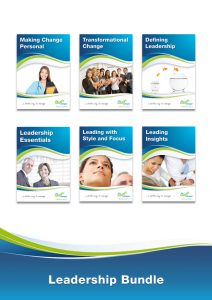 For more leadership resources look at our great-value guides. These include some excellent tools to help your personal development plan. The best-value approach is to buy our Leadership bundle, available from the store.
We’ve bundled together these five e-guides at half the normal price! Read the guides in this order, and use the tools in each, and you’ll be well on your way to achieving your personal development plan. (6 guides, 167 pages, 27 tools and 22 insights, for half price!)
- Leadership Essentials
- Defining Leadership
- Leading Insights
- Leading with Style and Focus
- Transformational Change
- Making Change Personal
Blog Content: Most blog pages on this site are from sponsored or guest contributors. Although we may receive payment for these, all posts are vetted to ensure they meet our editorial standards and offer value for our readers.
>> Return to the Leadership Knowledge Hub